

The New God Argument
The New God Argument is a logical argument for faith in God. It's based on moral and practical assumptions that are consistent with current science and emerging technology trends. The argument is not proof that God exists. Rather, it proves that if we trust in the compassionate and creative superhuman potential of our civilization then we should also trust in that which may qualify as God.
The name of the argument has three meanings. Each suggests reasons why many people find it persuasive, both rationally and emotionally, in ways that other arguments fail.
- It's a new argument for God, especially in the qualitative sense. Most philosophical arguments for the existence of God have been retrospective or analytical, like the fine-tuning and ontological arguments. In contrast, this is prospective and empirical.
- It's an argument for a new God, in the paradigmatic sense. Most people haven't thought of God this way. But the argument is compatible with traditional scripture. So it inspires many with mainstream religious backgrounds who are looking for proof God is real.
- And it's an argument from a new God, in the logical sense. It deduces from the assumption that new Gods may come into being, God may create more Gods, or God may decentralize. This is an ancient and enduring religious belief, even among Christians.
The argument has implications for the philosophy of religion. But the argument is secular. It begins outside any religious doctrine. And it connects human life and human experience back to religion and a concept of God.
The New God Argument is based on five assumptions. Two describe the general possibility space for the future of humanity. Three prescribe specific possibilities that we may prefer.
The assumptions amount to trust that we, as a human civilization, will evolve into a superhuman civilization. As a superhuman civilization, we will decentralize power. And we will create many worlds that emulate our evolutionary history.
The assumptions may be false. But there are strong reasons to believe that the general possibilities are true. And there are strong reasons to trust that we can make the specific possibilities true. Indeed, we should and even must make them true, according to some conceptions of the good life and human thriving.
When taken together, the assumptions prove that superhuman civilizations probably would be more compassionate than we are and a superhuman civilization probably created our world. In other words, if we trust in the compassionate and creative superhuman potential of our civilization then we should also trust that we have a superhuman compassionate creator.
In some religions, a superhuman compassionate creator may qualify as God. So trust in the superhuman potential of our civilization may entail faith in God. Atheism may entail distrust in our compassionate and creative superhuman potential. And it may be particularly incoherent to combine atheism with trust in the superhuman potential of our civilization.
Definitions

compassion : the limit of cooperation, or at least practically indistinguishable therefrom
cooperation : the application of intelligence in a manner that refrains from thwarting or assists with achieving decentralized goals
courage : trust : faith : the application of intelligence in a manner that commits to achieving goals despite risks
creation : computation : the application of intelligence
decentralized : the state of being in many different places
goal : purpose : a desired or willed situation
God : a superhuman civilization that is more compassionate than we are and that created our world
human civilization : humanity and its technological extensions
humanity : all organisms of the homo sapiens species
intelligence : agency : power to achieve goals
posthumanity : evolutionary descendants of humanity
power : capacity to change situations
superhuman civilization : superhumanity and its technological extensions
superhumanity : superintelligent posthumanity
superintelligence : intelligence that surpasses that of its evolutionary ancestors in every way
Courage Assumption
CA
we, as a human civilization, probably will not become extinct before evolving into a superhuman civilization
(Courage Assumption)
Compassion Argument
AA
EITHER we, as a human civilization, probably will become extinct before evolving into a superhuman civilization (Extinction Hypothesis)
OR we, as a superhuman civilization, probably will centralize power (Singleton Hypothesis)
OR superhuman civilizations probably would be more compassionate than we are (Compassion Hypothesis)
(Alignment Argument)
DA
we, as a superhuman civilization, probably will decentralize power
(Decentralization Assumption)
COC
superhuman civilizations probably would be more compassionate than we are
(Compassion Conclusion from Courage Assumption, Alignment Argument, and Decentralization Assumption)
Creation Argument
GSA
EITHER we, as a human civilization, probably will become extinct before evolving into a superhuman civilization (Extinction Hypothesis)
OR we, as a superhuman civilization, probably will not create many worlds that emulate our evolutionary history (Abstinence Hypothesis)
OR a superhuman civilization probably created our world (Creation Hypothesis)
(Generalized Simulation Argument)
FA
we, as a superhuman civilization, probably will create many worlds that emulate our evolutionary history
(Fecundity Assumption)
CRC
a superhuman civilization probably created our world
(Creation Conclusion from Courage Assumption, Generalized Simulation Argument, and Fecundity Assumption)
God Conclusion
GC
BOTH superhuman civilizations probably would be more compassionate than we are
AND a superhuman civilization probably created our world
(God Conclusion from Compassion Conclusion and Creation Conclusion)
For Mormons
This is a presentation of the first version of the New God Argument to a Mormon audience in 2008.
For Transhumanists
This is a presentation of the second version of the argument to a secular audience in 2010.
Publications

The third version of the New God Argument is included in "What is Mormon Transhumanism?" This paper is published in volume 13 issue 2 of the journal of Theology and Science.
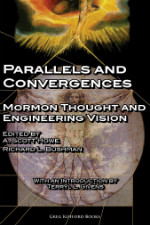
The second version is published in "Theological Implications of the New God Argument," Parallels and Convergences: Mormon Thought and Engineering Vision.
Commentary
Cannon, Lincoln. "New God Argument (Version 4.0)." Lincoln Cannon. 8 July 2026. Web.
Cannon, Lincoln. "Marek Wójtowicz on the New God Argument." Lincoln Cannon. 1 May 2025. Web.
Cannon, Lincoln. "Jesus Christ in the New God Argument." Lincoln Cannon. 29 Sep. 2019. Web.
Cannon, Lincoln. "Evolution of the New God Argument." Lincoln Cannon. 20 Sep. 2019. Web.
Cannon, Lincoln. "Scrutinizing Compassion in the New God Argument (Version 3.4)." Lincoln Cannon. 17 Sep. 2019. Web.
Prisco, Giulio. "From Elon Musk to Joseph Smith: a material simulation hypothesis." Turing Church. 19 May 2017. Web.
Cannon, Lincoln. "New God Argument (Version 3.3)." Lincoln Cannon. 3 June 2016. Web.
Ostler, Blaire. "Diversity of God." Blaire Ostler. 12 May 2016. Web.
Jones, Caleb. "Why I Believe: Mind and Heart." Navigating Discipleship. 28 Mar. 2016. Web.
Redding, Micah. "The New God Argument and A New Apologetics." Micah Redding. 21 Jan. 2016. Web.
Cannon, Lincoln. "New God Argument (Version 3.2)." Lincoln Cannon. 25 June 2015. Web.
Cannon, Lincoln. "New God Argument (Version 3.1)." Lincoln Cannon. 18 Apr. 2015. Web.
Cannon, Jonathan. "Reason to Believe." Rational Faiths. 21 July 2014. Web.
Cannon, Lincoln. "New God Argument (Version 3.0)." Lincoln Cannon. 9 May 2014. Web.
West, Joseph. "Theological Implications of the New God Argument." YouTube. 22 May 2012. Web.
Cannon, Lincoln. "Trust in Posthumanity and the New God Argument." Lincoln Cannon. 3 Oct. 2010. Web.
Cannon, Lincoln. "Inspired by Richard Dawkins' 'The God Delusion'." Lincoln Cannon. 27 June 2010. Web.
Cannon, Lincoln. "Theological Implications of the New God Argument." Lincoln Cannon. 26 Mar. 2010. Web.
Cannon, Lincoln. "New God Argument (Version 2.0)." Lincoln Cannon. 26 Mar. 2010. Web.
Cannon, Lincoln, Joseph West, and Chris Bradford. "The New God Argument Begins." Lincoln Cannon. 9 Aug. 2008. Web.
Cannon, Lincoln. "New God Argument (Version 1.0)." Lincoln Cannon. 8 Aug. 2008. Web.