

The Compassion Argument
The Compassion Argument is a logical argument for trust that superhuman civilizations would be more compassionate than we are. It doesn't prove compassion. Rather, we may have practical and moral reasons to trust that our human civilization will evolve into a superhuman civilization and decentralize power. If so, because superhuman decentralization would cultivate and depend on cooperation at extents practically indistinguishable from compassion, we should also trust that superhuman civilizations would be more compassionate than we are.
The Compassion Argument was formerly known as the Benevolence Argument and the Charity Argument.
Alignment Argument
AA
EITHER we, as a human civilization, probably will become extinct before evolving into a superhuman civilization (Extinction Hypothesis)
OR we, as a superhuman civilization, probably will centralize power (Singleton Hypothesis)
OR superhuman civilizations probably would be more compassionate than we are (Compassion Hypothesis)
(Alignment Argument)
Argument Support
- Technologists expect increasing risk
- Bostrom, Nick. Glocal Catastrophic Risks. Oxford University, 2008. Print.
- Bostrom, Nick. Superintelligence: Paths, Dangers, Strategies. Oxford University, 2014. Print.
- Cannon, Jonathan. "If ye are not one." Rational Faiths. 16 June 2014. Web.
- Cannon, Jonathan. "Love Conquers the Multiverse." Rational Faiths. 17 Nov. 2014. Web.
- Cannon, Jonathan. "What's keeping us from becoming Gods?" Rational Faiths. 17 Mar. 2014. Web.
- Cannon, Lincoln. "Can non-benevolent super-intelligence persist?" Lincoln Cannon. 31 Oct. 2010. Web.
- Cannon, Lincoln. "The Semi-Orthogonality Hypothesis." Lincoln Cannon. 1 Mar. 2015. Web.
- Cannon, Lincoln. "From Coronavirus to Compassion." Lincoln Cannon. 12 Mar. 2020. Web.
- Fox, Joshua, and Carl Shulman. "Superintelligence Does Not Imply Benevolence." MIRI. 2010. Web.
- Gauthier, David. Morals By Agreement. Oxford University, 1986. Print.
- Hanson, Robin. "The Great Filter." George Mason University. 15 Sep. 1998. Web.
- Singer, Peter. The Expanding Circle: Ethics, Evolution, and Moral Progress. Princeton University, 1981. Print.
- Trivers, Robert. "Evolution of Reciprocal Altruism." Quarterly Review of Biology 46.1: 35-57. 1 Mar. 1971. Print.
- Wright, Robert. Nonzero: The Logic of Human Destiny. New York: Random House, 2000. Print.
- [click here to propose a link]
Decentralization Assumption
DA
we, as a superhuman civilization, probably will decentralize power
(Decentralization Assumption)
Assumption Support
- Steven Pinker observes declining violence
- Cannon, Lincoln. "Compassion Above and Beyond Technofascism." Lincoln Cannon. 21 May 2014. Web.
- Cannon, Lincoln. "The Reputation Web." Lincoln Cannon. 11 May 2015. Web.
- Cannon, Lincoln. "Why Decentralization Is Essential to Human Thriving." Lincoln Cannon. 31 Jan. 2021. Web.
- Cannon, Lincoln. "Blockchain Defenses Against the Singleton." Lincoln Cannon. 5 Dec. 2024. Web.
- Pinker, Steven. The Better Angels of Our Nature. New York: Penguin, 2011. Print.
- Pinker, Steven. "Violence Vanquished." Wall Street Journal. 24 Sep. 2011. Web.
- [click here to propose a link]
Compassion Conclusion
COC
superhuman civilizations probably would be more compassionate than we are
(Compassion Conclusion from Courage Assumption, Alignment Argument, and Decentralization Assumption)
Deduction Support
Steven Pinker observes declining violence
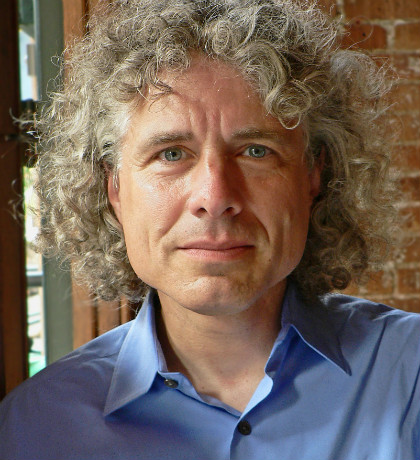
"The decline of violence is a fractal phenomenon, visible at the scale of millennia, centuries, decades, and years. It applies over several orders of magnitude of violence, from genocide to war to rioting to homicide to the treatment of children and animals. And it appears to be a worldwide trend, though not a homogeneous one. The leading edge has been in Western societies, especially England and Holland, and there seems to have been a tipping point at the onset of the Age of Reason in the early seventeenth century. ...
"The sociologist Norbert Elias suggested that European modernity accelerated a 'civilizing process' marked by increases in self-control, long-term planning, and sensitivity to the thoughts and feelings of others. These are precisely the functions that today's cognitive neuroscientists attribute to the prefrontal cortex. But this only raises the question of why humans have increasingly exercised that part of their brains. No one knows why our behavior has come under the control of the better angels of our nature, but there are four plausible suggestions.
"The first is that Hobbes got it right. Life in a state of nature is nasty, brutish, and short, not because of a primal thirst for blood but because of the inescapable logic of anarchy. ... These tragedies can be averted by a state with a monopoly on violence, because it can inflict disinterested penalties that eliminate the incentives for aggression, thereby defusing anxieties about preemptive attack and obviating the need to maintain a hair-trigger propensity for retaliation.
"Payne suggests another possibility: that the critical variable in the indulgence of violence is an overarching sense that life is cheap. ... As technology and economic efficiency lengthen and improve our lives, we place a higher value on life in general.
"A third theory, championed by Robert Wright, invokes the logic of non-zero-sum games: scenarios in which two agents can each come out ahead if they cooperate, such as trading goods, dividing up labor, or sharing the peace dividend that comes from laying down their arms. ...
"Then there is the scenario sketched by philosopher Peter Singer. Evolution, he suggests, bequeathed people a small kernel of empathy, which by default they apply only within a narrow circle of friends and relations. Over the millennia, people's moral circles have expanded to encompass larger and larger polities: the clan, the tribe, the nation, both sexes, other races, and even animals. The circle may have been pushed outward by expanding networks of reciprocity, a la Wright, but it might also be inflated by the inexorable logic of the golden rule: The more one knows and thinks about other living things, the harder it is to privilege one's own interests over theirs. The empathy escalator may also be powered by cosmopolitanism, in which journalism, memoir, and realistic fiction make the inner lives of other people, and the contingent nature of one's own station, more palpable -- the feeling that 'there but for fortune go I.'"
Pinker, Steven. "A History of Violence." New Republic. 19 Mar. 2007. Web.