

The Creation Argument
The Creation Argument is a logical argument for trust that a superhuman civilization created our world. It doesn't prove creation. Rather, we may have practical and moral reasons to trust that our human civilization will evolve into a superhuman civilization and create many worlds that emulate our evolutionary history. If so, because creation of many worlds would result in emulated histories that vastly outnumber others, we should also trust that a superhuman civilization created our world.
Generalized Simulation Argument
GSA
EITHER we, as a human civilization, probably will become extinct before evolving into a superhuman civilization (Extinction Hypothesis)
OR we, as a superhuman civilization, probably will not create many worlds that emulate our evolutionary history (Abstinence Hypothesis)
OR a superhuman civilization probably created our world (Creation Hypothesis)
(Generalized Simulation Argument)
Argument Support
- Nick Bostrom confirms a generalized Simulation Argument
- Bostrom, Nick. "The Simulation Argument." The Simulation Argument. 2008. Web.
- Cannon, Jonathan. "Choose Your Own Universe." Rational Faiths. 27 Oct. 2014. Web.
- Cannon, Jonathan. "The Creation Argument." Rational Faiths. 19 May 2014. Web.
- Cannon, Lincoln. "Generalized Simulation Argument." Lincoln Cannon. 22 Apr. 2008. Web.
- Cannon, Lincoln. "Are We Living in a Family History Simulation?" Lincoln Cannon. 13 Dec. 2013. Web.
- Cannon, Lincoln. "Still Insane for Believing the Simulation Hypothesis." Lincoln Cannon. 5 Feb. 2019. Web.
- Cannon, Lincoln. "Technological Uniformity Saves the Simulation." Lincoln Cannon. 10 May 2025. Web.
- Steinhart, Eric. "Theological Implications of the Simulation Argument." Ars Disputandi 10. 2010. Web.
- [click here to propose a link]
Fecundity Assumption
FA
we, as a superhuman civilization, probably will create many worlds that emulate our evolutionary history
(Fecundity Assumption)
Assumption Support
- Atheists on the Simulation Hypothesis
- Technologists on the Simulation Hypothesis
- Cannon, Lincoln. "Future Technology for Family History Simulations." Lincoln Cannon. 8 Dec. 2013. Web.
- Cannon, Lincoln. "You Should Hope You're Living in a Computed World." Lincoln Cannon. 24 Jun. 2016. Web.
- Steinhart, Eric. Your Digital Afterlives. New York: Palgrave Macmillan, 2014. Print.
- [click here to propose a link]
Creation Conclusion
CRC
a superhuman civilization probably created our world
(Creation Conclusion from Courage Assumption, Generalized Simulation Argument, and Fecundity Assumption)
Deduction Support
Nick Bostrom confirms a generalized Simulation Argument
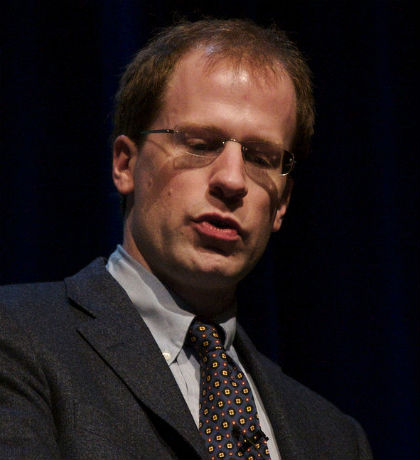
"Yes, the form of the simulation argument could in principle be applied more generally, but one would have to check in each case whether the necessary empirical presuppositions obtain and whether the conclusions are interesting and significant.
"For example, with the terraforming argument, we would have to assume that the seeded civilizations could not detect directly whether or not they had been seeded; also, that each advanced civilization that decided to terraform would create very large numbers of terraformed planets on which creatures similar to ourselves would evolve. Both of these assumptions might be doubted. The argument would also have to consider our temporal position. Civilizations resulting from the seeding or terraforming of a planet would be able, like we are, to determine the cosmic epoch in which they lived, and this might place some constraints on how many planets civilizations arising earlier than ours would have had time to seed by now (taking into account the lag required for the seeds to mature).
"Likewise, one can consider a 'cosmoforming argument', focusing on the possibility that an advanced civilization with some as-yet unknown technology might be able to induce the creation of baby universes (perhaps expanding into hidden dimensions). The transposition of the simulation argument form to this hypothesis is straightforward. However, the conclusion of this cosmoforming argument seems less significant than that of the simulation argument. It would not be particularly surprising to learn, for example, that it is impossible for any ever-so-advanced civilization to spawn new universes; nor, perhaps, would be as shocking to learn that our universe had been spawned from some parent universe as a consequence of the actions of intelligent agents there as it would be to learn that we are living in a computer simulation.
"The bottom line is that terraforming, cosmoforming, and 'Truman Show' arguments are compatible with the simulation argument, and are parallel in terms of their logical structure. Some of these alternative applications might be interesting. They each have to be evaluated on their merits."
Bostrom, Nick. "The Simulation Argument FAQ." The Simulation Argument. 2008. Web. 15 Aug. 2014.